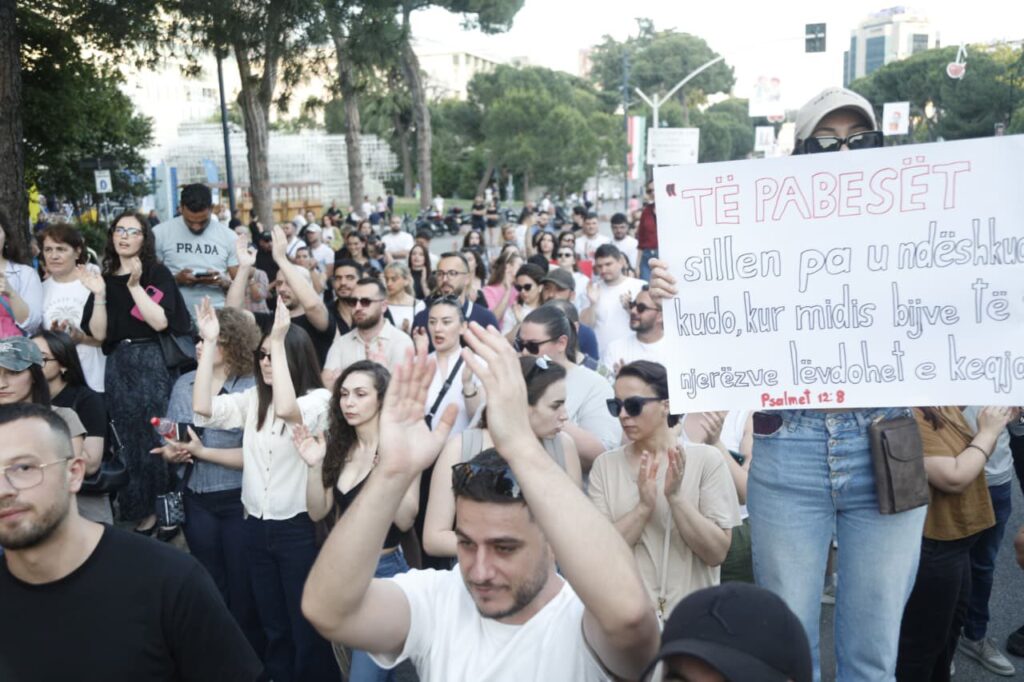
A follow-up to our reporting on Saturday’s clash. A belief has settled into the public conversation that the government gave away public land for this resort. It did not. The parcels were private, and the developer bought them.
TIRANA EXAMINER | Legal Desk
Since Saturday’s confrontation at Portonovë, a single idea has hardened in the public conversation and travelled faster than the facts beneath it: that the Albanian state took public land and handed it to a foreign resort. It is the assumption behind much of the anger, and it is wrong. The land at the centre of this project was not public domain granted to a developer. It was private property, and the project acquired it by purchase. The distinction is not a technicality. It is the difference between a giveaway of the commons and a private real estate transaction, and the public deserves to know which one it is looking at.
The land enters the record as restitution property, not state holding. Albania’s restitution framework, built to return what Communism confiscated, recognised the parcels as belonging to pre-nationalisation owners and their heirs, the Shehu line, on the strength of documents that predate the taking, among them a 1937 judgment of the Vlora Peace Court and older cadastral entries. The courts treated this as the restoration of private title to private hands, which is the entire purpose of the law. Rival restitution claims from outside the family were tested in court and rejected. Whatever else is contested about this coastline, the land was adjudicated as private, not carved out of the public domain for the benefit of an investor.
What the state did, it did as a regulator, not as a donor. The government granted the project strategic-investor status, and it will issue the permits that allow construction to proceed only once the preconditions are met, environmental clearance among them. That is a real exercise of state power, and it is a fair subject for scrutiny, including whether a sensitive coastal zone should host development of this scale at all, and whether those preconditions are applied with the rigour the site demands. But it is regulatory approval, conditional and staged, of a private project on private land. It is not a conveyance of public property. No public parcel was transferred to the developer, no commons was signed away, and the people repeating that claim are arguing against something that did not happen.
The developer acquired the land the ordinary way. The parcels are held by Albanian Land Development, an Albanian company owned through a Qatar-based holding structure, which bought them under notarised contracts with payment routed through the banking system, and registered the title in its name with a mortgage entry against it. The State Police, correcting its account of Saturday, confirmed the documentation exists and is in order, and noted that any claim over the property belongs in a courtroom. A private buyer purchasing private land from its recognised owners, and registering the result, is not a scandal. It is what a property market is.
This matters for how Saturday is understood. If the land had been public and gifted, the protest would be a citizens’ stand against the looting of a shared asset. It was not that, because the premise is false. The grievance that remains is narrower and belongs in a different forum: disagreements over the land’s long restitution history, which has been litigated for two decades, are for the courts to resolve, not for a crowd at a fence and not for masked guards on the other side of it. The same rule binds both. One man was beaten on Saturday and now sits as a complainant while a guard sits under arrest, which is the law working as it should.
None of this requires pretending the title’s history is spotless. Parts of it have been fought over in court, and the permits that would let building begin have not yet been granted, since the preconditions, environmental clearance among them, remain to be satisfied. But the specific charge now animating the public mood, that the state surrendered public land, does not survive contact with the record. The land was private. The state did not grant or gift it, and it has not yet cleared construction. The developer bought the land from parties the courts had recognised as its owners. Everything else is a matter for the judges and courts. On the one question the public thinks it has already answered, the answer is the opposite of the rumour.