Tirana Examiner Newsroom
On the seventh day of the protests that began on 13 October, Prime Minister Edi Rama spoke four times on Monday, in three written posts and one televised statement delivered standing among State Police officers beside Interior Minister Ervin Demo. The government offered dialogue with the protesters in every text and set out who is excluded from it. Rama announced a €2,500 payment to every police officer deployed at the protests, declared that teachers in Lezhë who sent pupils against school windows will never again work for the state, and answered a joint appeal by civil society organisations with a demand that they first distance themselves from the violence.
By early afternoon the Tirana Prosecution Office had confirmed three criminal files on police conduct during the protests, the Health Ministry had put the injured at 303 over six days, and masked youths had broken into the Court of Appeal while staff were inside.
Monday on the street
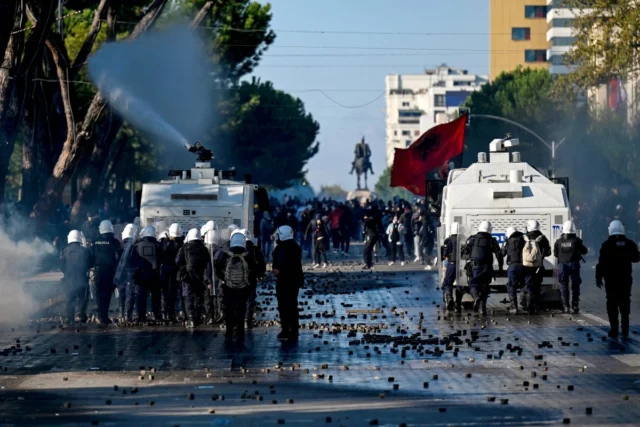
Protesters gathered again outside the Ministry of Education. Shqiptarja’s live coverage reported stones thrown at officers there, a march through the city streets, police checks at Mother Teresa Square, and, at about 13:26, water cannon used to disperse protesters on Rruga e Durrësit after stone attacks, with police calling on citizens to take children away. At 14:01 the outlet reported that protesters had attacked the Court of Appeal, smashing its windows, with some entering the building; footage from inside published at 14:15 showed the damage, and employees were in the premises at the time.
Rama’s red line post
Rama’s first text of the day was published at 10:22, according to Shqiptarja, with a photomontage of protest scenes from France, Germany, Italy, Spain and Albania. He wrote that protest is a right while violence is a crime, and that this red line “will be drawn sharply in this critical phase of our democratic development” (“kjo vijë e kuqe do të ndahet prerazi në këtë fazë kritike të zhvillimit tonë demokratik”). He called on citizens to be patient and “not to fall prey to the pressure of media manipulators and phone mirrors” (“të mos bien pre e presionit të manipulatorëve mediatikë dhe pasqyrave telefonike”).
Protesters must distance themselves from the violent, he wrote, “otherwise they will pay financially the same as them” (“përndryshe do të paguajnë financiarisht njësoj si ata”). The violent “must and will receive the legal and financial bill for their blindness” (“Dhunuesit duhet dhe do të marrin faturën ligjore e financiare të verbërisë së tyre”).
“I and the governing majority are ready for dialogue with anyone else except the violent and the political parties that do not distance themselves from violence. In any place. At any hour. Without conditions.” (“Unë dhe shumica qeverisëse jemi gati për dialog me këdo tjetër përveç dhunuesve dhe partive politike që nuk distancohen nga dhuna. Në çdo vend. Në çdo orë. Pa kushte.”)
The statement with the police
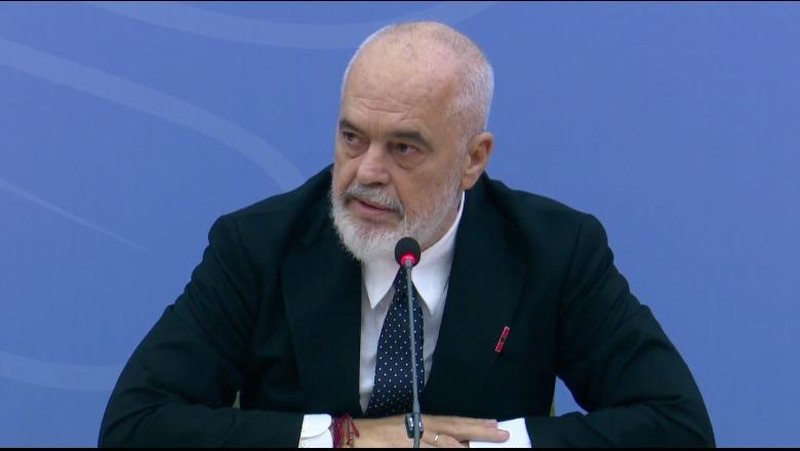
Rama then appeared with Minister Demo and State Police officers for a statement to the media. “It is a very great national misfortune that the police forces that exist to protect the state are not only under attack from stones but also under attack from the screens. This is chilling.” (“Është fatkeqësi kombëtare shumë e madhe që forcat e policisë që janë për të mbrojtur shtetin janë jo vetëm nën sulmin e gurëve por edhe nën sulmin e ekraneve. Kjo është rrënqethëse.”)
He said similar protests were taking place in France, Italy, Belgium and Portugal and would happen everywhere, but that in none of those countries had a political party “come out to take the side of the violent, or to cheer flames over institutions, or to hymn the club, the stone, the violence of some black-hooded masked men” (“të himnizojë drurin, gurin, dhunën e disave kapuçonësh të zinj të maskuar”), behind whom, he said, there are no students and no young people who want a better Albania.
“There are only blind beings, people without schooling, who do not know where they come from or where they are going, victims of many things, who adore the molotov, the slingshots with screws that strike the skulls of police officers, who adore disorder and chaos and then rush at the shops that gnaw the sweat and blood of the families who live from those shops.” (“Ka vetëm qenie të verbëra, njerez pa shkollë, që nuk dinë as nga vinë as ku shkojnë, viktima të shumçkaje të cilët adhurojnë molotovin, llastiqet me vida që godasin kafkat e policëve, adhurojnë rrëmujën dhe kaosin e pastaj ju turren dyqaneve që brejnë djersën dhe gjakun e familjeve që jetojnë me ato dyqane.”)
He asked how such a crowd could be supported, calling it “a mass that needs psychologists and to be treated by society as a human mass of girls and boys who come from the peripheries to destroy the centre” (“kjo masë e cila ka nevojë për psikolog e për tu trajtuar nga shoqëria si një masë njerëzore vajzash e djemsh që vijnë nga periferitë për të shkatërruar qendrën”), carrying the misunderstandings of an age in which they watch others living online, earning tens of euros a month without paying tax and living in luxury. These young people, he said, “are then used by these other forces, enemies of Albania” (“e këta pastaj përdoren nga këto forca të tjera, armiq të Shqipërisë”). Shqiptarja’s summary of the statement has him calling them hostages (“pengje”).
On 2018: “This is not a revolt for education. The revolt for education was the one of 2018, when they blocked Tirana for days and weeks. They were peaceful and had demands for the university. It took patience and calm to settle into a dialogue, and the dialogue happened. There may be things that can still be done, but now everyone can come and let us look at it.” (“Kjo nuk është një revoltë për arsimin. Revoltë për arsimin ishin ato të vitit 2018, kur e bllokuan Tiranën me ditë dhe me javë. Ishin paqësorë dhe kishin kërkesa për universitetin. U desh durim dhe qetësi për t’u vendosur në një dialog dhe dialogu u bë. Mund të ketë gjëra që mund të bëhen ende, por tani mund të vijnë të gjithë dhe ta shikojmë.”)
“How can they be students who admire the stone, and the others who applaud when police officers and small businesses burn? How can they be students who applaud the uprooting of cash machines and the burning of banks? These are not students, even if they may be registered at school.” (“Këta nuk janë studentë, edhe pse mund të jenë të regjistruar në shkollë.”) He called them “hooligans like those of the stone, the club and the fire” (“Huliganë si ata të gurit, hurit dhe zjarrit”), extremised and blinded by the idea that “let us overturn it, because if something is done, it will be done better”, adding that “the will of the people will be turned upside down” (“Vullneti i popullit do të kthehet përmbys”).
The police, he said, had been “at the maximum of their restraint” (“Policia ka qenë në maksimumin e përmbajtjes së vet”).
The analysts and the media
“The pressure of the street is not the only one, nor the worst. The worst is that of those so-called intellectuals and analysts, opinion-makers, who every evening draw up the balance sheet of violence and who console their grudges, their bile, their envies, their incompetence, their failure, with how many police officers are maimed, how many institutions are burned, and rub their hands because they think the end has come for Edi Rama and the government.” (“Nuk është presioni i rrugës i vetmi dhe as më i keqi. Më i keqi është ai i atyre të ashtuquajturve intelektualë dhe analistë, opinionistë, që çdo mbrëmje bëjnë bilancin e dhunës dhe që inatet, mllefet, zilite, paaftësitë, dështimin e tyre e ngushëllojnë me sa policë sakatohen, me sa institucione digjen dhe fërkojnë duart sepse mendojnë se i erdhi fundi Edi Ramës dhe qeverisë.”)
None of this, he said, “enters the magnifying glass of the laundries of black money in the media, nor the black holes where Albanians’ income is hidden, tax evasion of millions and millions of euros” (“nuk hyjnë në lupën e lavatriçeve të parave të zeza në media dhe as në gropat e zeza ku fshihen të ardhurat e shqiptarëve, evazion fiskal me miliona e miliona euro”), because those outlets exist “to bring the day of the stone and the club, with all kinds of slanders and with a daily, daily, daily drumbeat” (“për ta sjellë ditën e gurit dhe të hurit, me gjithfarë shpifjesh dhe me një tam-tam të përditshëm, të përditshëm e të përditshëm”), telling the whole world that every grievance comes “from those over there who are robbing you of everything every day”.
The officers’ resistance, he said, honours their uniform and the Albanian state and is a debt owed to “all the clear-headed citizens and ordinary families of this country, who today want to go to work, who do not want to sit in front of the television, who do not want to be under the pressure of all kinds of analysts who tell them that the Police are throwing stones at protesters” (“që sot duan të shkojnë në punë, nuk duan të rrinë para televizorit, nuk duan të jenë nën presionin e lloj-lloj analistësh që u tregojnë se Policia po gjuan me gurë protestuesit, ua kanë borxh”).
The teachers in Lezhë
Rama said that teachers had taken pupils out of school and told them: “Strike the windows of the school” (“Bini xhamave të shkollës”), as he said had happened in Lezhë. “That teacher and those teachers will never see the door of the school again and will never again hold any role as employees of the state, never again in the state.” (“Ajo mësuese dhe ata mësues nuk kanë për ta parë më derën e shkollës dhe nuk do të marrin më asnjë lloj roli si punonjës të shtetit, kurrë më në shtet.”) He asked: “How can a teacher tell a pupil to break the window of the school? What kind of movement is this to make Albania better, more European, more democratic, more humane?”
The Democratic Party, the minors and 21 January
Rama said the Democratic Party had given political shelter to the violent protesters the previous night, “doing the same thing they did in other times, refusing to let the Police do their work” (“duke bërë të njëjtën gjë edhe kur ishin në kohë të tjera, refuzimin për ta lënë Policinë të bëjë punën e vet”), but that in the past “they did not have the courage to the end to do what they are doing today”.
“The minors were found, who are taken and placed in front with iron bars and sent there as cannon fodder, dreaming that a police officer’s hand will slip and take the life of a minor, so that an even greater evil can then be justified.” (“U gjetën të miturit, që merren dhe vihen përpara me shufra hekuri dhe çohen atje mish për top, duke ëndërruar që një polici t’i shpëtojë dora dhe t’i marrë jetën një të mituri, që pastaj të justifikohet e keqja edhe më e madhe.”)
“Dreaming that 21 January returns here again, to make the sign of equality between me and us, who have brought Albania this far and have changed the face of this country and have raised the dignity of this country, and those who on the boulevard were killing protesters.” (“Duke ëndërruar që të kthehet këtu prapë 21 Janari, për të bërë shenjën e barazisë mes meje dhe nesh, që e kemi sjellë Shqipërinë deri këtu dhe e kemi ndërruar faqen e këtij vendi dhe e kemi ngritur dinjitetin e këtij vendi, me ata që në bulevard i vrisnin protestuesit.”)
€2,500 for every officer, and a pay rise
“We will raise your pay considerably. When we found the police betrayed and abandoned, we made a considerable increase then. Over the years, we have not raised your pay as much as we should have. We were discussing this a few weeks ago. With the new budget, from 1 January, your pay will be raised considerably. We will make available a sum of €2,500 for every officer at the front. We decided it this way, so as to make no difference. You are one, and one for all. The state will win this battle.” (“Ne do vëmë në dispozicion një shumë prej 2500 eurosh, për çdo efektiv në front. E vendosëm kështu, për të mos bërë asnjë diferencë. Jeni një, dhe një për të gjithë. Shteti do ta fitojë këtë betejë.”) Shqiptarja reported that the same sum applies to all regardless of salary.
The police video
At 12:04 Rama posted a video showing him surrounded by State Police officers in conversation, set to Tina Turner’s “The Best”. The caption: “Respect, and yes, you are the best in these days of aggression with stones and fire against the dream of Albania 2030 in the European Union. Patience and self-restraint with the young people who protest. Force with the masked stone-throwers and arsonists.” (“Respekt dhe po, jeni më të mirët në këto ditë agresioni me gurë e me zjarr mbi ëndrrën e Shqipërisë 2030 në Bashkimin Europian. Durim dhe vetëpërmbajtje me të rinjtë që protestojnë. Forcë me gurëhedhësit dhe zjarrvënësit e maskuar.”)
Demo’s statement
Interior Minister Ervin Demo published his own statement on Facebook, reported by Shqiptarja at 12:44:
“The right to protest is guaranteed by the Constitution and the State Police has the obligation to respect and protect it. The State Police will never be the instigator of confrontation with protesters. Its duty is to guarantee the peaceful conduct of the protest, order and the security of every citizen.” (“Policia e Shtetit nuk do të jetë asnjëherë nxitëse e përplasjes me protestuesit.”)
“Police intervention will take place only when it is necessary and lawful to prevent or stop acts of violence, to protect life, Police employees, citizens and public and private property, always in respect of the principle of proportionality.” (“gjithmonë në respektim të parimit të proporcionalitetit”)
“Protest is a democratic right. Violence is not and cannot be part of it. The Government remains open and ready for dialogue with the protesters, at any time and on any concern or demand they wish to raise. We believe that dialogue, listening and direct communication are the way to address concerns and find solutions. No door is closed to dialogue and no act of violence can replace it.” (“Asnjë derë nuk është e mbyllur për dialogun dhe asnjë akt dhune nuk mund ta zëvendësojë atë.”)
“Responsibility for acts of violence is individual. No one can hide behind the right to protest to justify breaking the law. Every person who commits unlawful acts will answer before the law, without exception.” (“Askush nuk mund të fshihet pas të drejtës për të protestuar për të justifikuar shkeljen e ligjit.”)
“We will protect equally the right to protest, the security of citizens and the authority of the law.”
Balla: the prosecutor should go tonight
Taulant Balla, head of the Socialist Party parliamentary group, called on the Tirana Prosecution Office to act on reports that masked protesters had sheltered in the Democratic Party headquarters. “The masks fell! The ‘students’ return to the 35-year-old ‘University’ of violence, the headquarters of Sali Berisha. The Tirana Prosecution Office should go tonight if it wants to investigate, because tomorrow the servers and cameras will have been wiped, as Saliu did on 21 January.” (“Maskat ranë! ‘Studentët’ rikthehen në ‘Universitetin’ 35-vjeçar të dhunës, Selinë e Sali Berishës. Prokuroria e Tiranës të shkojë sonte nëse do ta hetojë, sepse nesër do jenë fshirë serverat dhe kamerat, siç Saliu bëri me 21 Janar.”)
In a second post Balla wrote: “Saliu strikes at justice from SPAK and meanwhile sends his birds to the Socialist Party building for the next attack.” (“Saliu nga SPAK-u godet drejtësinë dhe ndërkohë çon zogjtë e vet tek godina e Partisë Socialiste për sulmin e radhës.”)
Gogu and Ibrahimaj
Justice Minister Toni Gogu wrote: “These are difficult days for Tirana and for many Albanian families. People injured, families worried, citizens who have experienced fear and insecurity. I wish with all my heart a quick recovery to every police officer, protester or citizen who has been hurt. After everything we have seen these days, it is clear that violence solves no problem. It only adds pain to people.” (“Pas gjithë asaj që kemi parë këto ditë, është e qartë se dhuna nuk zgjidh asnjë problem. Ajo u shton njerëzve vetëm dhimbje.”) “Today a new week begins,” he continued (“Sot nis një javë e re”); for the Ministry of Justice that means continuing legal aid, overseeing rights in penitentiary institutions and keeping services running, “because especially in difficult days, people need institutions that stand by them”.
Economy Minister Delina Ibrahimaj posted a video of the damage: “This is our Tirana after days of violence. Destroyed bus stops, damaged businesses, burnt-out buildings, attacked institutions. Violence has not spared even the post office where pensioners collect their pensions and has swept over the banks, where we receive our wages and pay our bills. The investments of honest people, who support families and employ others, have been struck today.” (“Dhuna nuk ka kursyer as postën ku pensionistët marrin pensionet dhe ka vërshuar mbi bankat, ku marrim pagat e paguajmë faturat.”) “Violence has spared nothing and no one. The consequences of Tirana today we will all suffer tomorrow. We deserve a different future, not the chaos and insecurity we are living through.” (“Pasojat e Tiranës sot do t’i vuajmë të gjithë nesër. Ne meritojmë një të ardhme ndryshe, jo kaosin dhe pasigurinë që po përjetojmë.”)
The civil society appeal
The statement Rama answered was issued on Sunday 18 October under the title “Stop the violence, protect life and the right to peaceful protest!” (“Ndaloni dhunën, mbroni jetën dhe të drejtën për protestë paqësore!”), initially with 19 signatories. The version circulating on Monday, which Rama quoted from, lists 22 organisations; Shqiptarja referred to 21.
The organisations called for an immediate halt to violence and restraint from all, saying that protecting the life, health and dignity of protesters, police officers, journalists and passers-by “must be the absolute priority” (“duhet të jetë përparësia absolute”).
To the protesters, they wrote that peaceful protest is a fundamental right guaranteed by Article 47 of the Constitution, Article 11 of the European Convention on Human Rights and Article 21 of the International Covenant on Civil and Political Rights, and called on participants “to protest peacefully, without attacks on persons and without destruction of property” (“të protestojnë paqësisht, pa sulme ndaj personave dhe pa shkatërrim të pronës”).
To the authorities, they wrote that the state has an obligation to facilitate peaceful protest, de-escalate and prevent injuries; that every use of force by the police “must be lawful, strictly necessary and proportional, using peaceful means first” (“duhet të jetë i ligjshëm, rreptësisht i nevojshëm dhe proporcional, duke përdorur paraprakisht mjetet paqësore”); and that “acts of violence by individual persons do not justify indiscriminate intervention against peaceful protesters” (“Aktet e dhunës së individëve të veçantë nuk justifikojnë ndërhyrje pa dallim ndaj protestuesve paqësorë”). They condemned “every unjustified or disproportionate use of force by police structures against protesters” (“çdo përdorim të pajustifikuar apo disproporcional të forcës nga strukturat policore ndaj protestuesve”) and said that guaranteeing public order “cannot serve as a justification for violating the physical integrity, dignity and fundamental rights of citizens”.
They demanded immediate medical help for every injured person, special protection for minors, respect for the rights of every detained person, and that “every allegation of violence or unlawful use of force must be investigated quickly, independently and impartially” (“Çdo pretendim për dhunë apo përdorim të paligjshëm të forcës duhet të hetohet shpejt, në mënyrë të pavarur dhe të paanshme”).
The closing paragraph, the one Rama reproduced: “We call on political representatives and state leaders to avoid inciting rhetoric and to create space for dialogue. Respect the right to peaceful protest. Protect the life and dignity of every person. No life must be put at risk.” (“U bëjmë thirrje përfaqësuesve të politikës dhe drejtuesve të shtetit të shmangin retorikën nxitëse dhe të krijojnë hapësirë për dialog. Respektoni të drejtën e protestës paqësore. Mbroni jetën dhe dinjitetin e çdo personi. Asnjë jetë nuk duhet vënë në rrezik.”)
The signatories, in the 22-name version: Civil Rights Defenders Albania; SCiDEV; the AWEN Network; the Gender Alliance for Development Centre; the “Faktoje” Centre; the Albanian Institute of Science (AIS); the Balkan Investigative Reporting Network in Albania (BIRN Albania); the Erasmus Network Tirana; Citizens.al; the Amfora Centre; the Centre for Environmental Protection and Sustainable Development; the Protection and Preservation of Natural Environment in Albania (PPNEA); the Albanian Centre for Economic Research (ACER); Partners Albania for Change and Development; the Centre for Comparative and International Studies (QSKN); the Albanian Centre for Quality Journalism; the Information and Active Citizenship Network (INAC); the organisation Together for Life; the Association of Albanian Journalists (ASHG); the Young Professionals Network; the “Së Bashku” Foundation; and the Union of Albanian Journalists. The last three were not on Sunday’s list of 19.
Rama’s reply to the organisations
At 13:06 Rama published the closing paragraph of the statement on Facebook with his reply:
“Give the example of dialogue yourselves first, and as far as the government is concerned, we will be there.
And meanwhile distance yourselves clearly from the violence, the stones, the arson of institutions, the abuse of minors, so that in this way you also help the peaceful protesters to exercise their right, which is not endangered by the police but by the violent men who lead the pseudo-student masquerade.
And yes, let us all together respect the right to peaceful protest, from the violent men at the head of the protest!
Let us all together protect the life and dignity of every person, from violence and manipulation!
No life must be put at risk and no game must be played with the life of the country.
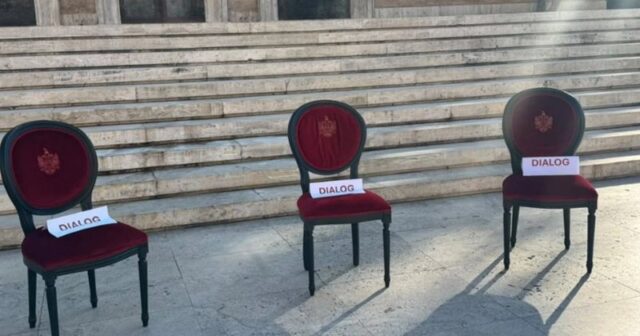
Bujrum, DIALOGUE. Wherever you want. Whenever you want. Without conditions.”
(“Jepeni ju të parët shembullin e dialogut dhe për sa i takon qeverisë ne do të jemi aty. E ndërkohë distancohuni qartë nga dhuna, gurët, zjarrvënia e institucioneve, keqpërdorimi i të miturve, që të ndihmoni kësisoj edhe protestuesit paqësorë të ushtrojnë të drejtën e tyre, e cila nuk rrezikohet nga policia po nga dhunuesit që i prijnë maskaradës pseudo-studentore. Dhe po, të respektojmë të gjithë bashkë të drejtën e protestës paqësore – nga dhunuesit në krye të protestës! Ta mbrojmë të gjithë bashkë jetën dhe dinjitetin e çdo personi – nga dhuna dhe manipulimi! Asnjë jetë nuk duhet vënë në rrezik dhe asnjë lojë nuk duhet bërë me jetën e vendit. Bujrum, DIALOG. Ku të doni. Kur të doni. Pa kushte.”)
“Bujrum” is the Albanian word of welcome, roughly “come, you are welcome”. Shqiptarja framed the post as an invitation to the organisations to take the initiative for a dialogue between government and protesters.
From the protesters
Outside the Ministry of Education, a masked protester told Report Tv that the only demand is Rama’s resignation: “When we protested peacefully for three months and chose to talk, Edi Rama did not want to talk to us. Now that we have risen and revolted, he is choosing to talk, but we do not want to talk now. It is too late.” (“Sepse kur ne protestuam tre muaj paqësisht dhe zgjodhëm të flisnim, Edi Rama nuk donte të fliste me ne. Tani që ne u ngritëm dhe u revoltuam, ai po zgjedh të flasë, por ne nuk duam të flasim tani. Është tepër vonë.”) He said he had joined “to do violence and show him: either you talk or you withdraw” (“që të bëj dhunë dhe t’i tregoj që o do flasësh, o do tërhiqesh”), and that he had left high school because he wanted to work: “I personally think high school is a waste of time. If you do three years and take the diploma, I in three years, 36 months, even at 400,000 lek a month, who knows how much I have made.” (“Unë personalisht mendoj që gjimnazi është harxhim kohe.”) He called on those “at home eating sunflower seeds and crisps and watching us on television” to come to the square.
Another masked protester, a university student, said: “We are protesting as students, so that we get our schooling not through connections but through merit. We sent a message to the teachers that we would boycott classes. They told us: represent us as well as you can.” (“I kemi dërguar mesazh zyshave se do të bojkotojmë mësimin. Na kanë thënë na përfaqësoni sa më mirë.”)
High school pupils at the same spot said they were ready for the consequences Rama had warned of. A pupil of the Isa Boletini school: “We came out for our rights because many people have been beaten. The directorate told us not to come out, but we do not ask them. Let there be consequences, let Rama bear his own consequences with this state he has made. One day Rama will fall.” (“Drejtoria na ka thënë mos të dalim, por ne nuk i pyesim.”) One said: “I am 14. Rama thinks only of himself.” Another: “Yesterday was my 15th birthday. I lived the protest with sorrow. Half our relatives are in emigration.”
The toll
Health Minister Klodiana Spahiu, visiting the Trauma hospital, gave the figures for 13 to 18 October: 303 people injured, of them 190 police officers, 87 protesters and 26 passers-by, compiled from the University Trauma Hospital, the “Mother Teresa” University Hospital Centre and the regional hospitals of Durrës, Vlorë and Lezhë.
She addressed parents and guardians: “Children have the right to express their opinion, but they also need our presence, care and protection.” (“Fëmijët kanë të drejtë të shprehin mendimin e tyre, por kanë nevojë edhe për praninë, kujdesin dhe mbrojtjen tonë.”) Social services and psychologists are engaged for minors who need help, she said, “but the responsibility to protect them is shared”. She warned against “false news and manipulated images or images taken out of context” (“lajmeve të rreme dhe e pamjeve të manipuluara ose të nxjerra jashtë kontekstit”) and asked people to verify before sharing and to rely on official sources. She closed: “Let us listen to them. Let us understand them. Let us protect them. Children come first!” (“T’i dëgjojmë. T’i kuptojmë. T’i mbrojmë. Fëmijët janë të parët!”)
Three files on the police
The Prosecution Office at the Tirana Court of First Instance of General Jurisdiction confirmed on Monday afternoon that, together with the Police Oversight Agency (AMP), it has registered three criminal files concerning events during the protests, “related, among other things, to the events in which the citizens L.B. and M.S. were injured, as well as to other actions carried out by State Police employees” (“lidhen, ndër të tjera, me ngjarjet gjatë të cilave janë dëmtuar shtetasit L.B. dhe M.S., si dhe me veprime të tjera të kryera nga punonjës të Policisë së Shtetit”).
The two named cases, per Shqiptarja: Ledion Balla, 19, suffered a leg fracture near Parliament on 13 October; footage showed four officers carrying him by the limbs; he has said he was not part of the protest but passing by; four officers and the head of public order at Police Station No. 1 were suspended after the video. Muhamed Skana, 21, was injured on 16 October near the Ministry of Education when thrown to the asphalt during a police intervention, with head and spinal injuries treated at the Trauma hospital. A third file covers verification of the conduct of police officers generally. The prosecution said it is following the situation continuously “with the aim of documenting every possible case of violation of the law”.
Banks, journalists, a denial
The Bank of Albania issued a statement saying that citizens’ deposits and savings in the banking system are safe, that damage to physical infrastructure in some bank branches “does not affect the security of clients’ deposits or the financial stability of the banks” (“nuk cenojnë sigurinë e depozitave të klientëve dhe as qëndrueshmërinë financiare të bankave”), that payments have continued without interruption, and that temporary service restrictions in certain branches relate to the physical safety of staff and clients. It called on citizens exercising the right to peaceful protest “to respect and protect the security of the Bank of Albania, of banking institutions, their premises, infrastructure and employees”.
The European Centre for Press and Media Freedom (ECPMF), based in Leipzig, said at least 25 attacks on journalists had been recorded in six days of protests, citing figures from the Association of Journalists of Albania, and said most incidents involved police officers obstructing journalists in their work. It called on the Director General of the State Police, Skënder Hita, to engage urgently with the association and other media organisations on immediate security protocols for journalists covering demonstrations.
The Ministry for Europe and Foreign Affairs denied a report, which had circulated the previous day, that an aircraft from Israel would bring anti-riot equipment for the State Police. Spokesman Alteo Hysi: “It is simply a fabrication. Such false news is irresponsible and reprehensible.” (“Bëhet fjalë thjesht për një fabrikim. Lajme të tilla të rreme janë të papërgjegjshme dhe të dënueshme.”) When such stories are “fabricated and spread with the aim of inciting distrust, insecurity or tension”, he said, they become instruments of information manipulation, and when foreign actors stand behind them or amplify them, “we are dealing with foreign interference through information manipulation, which constitutes a serious threat to national security” (“ndërhyrjen e huaj përmes manipulimit të informacionit, e cila përbën një kërcënim serioz për sigurinë kombëtare”). “Not everything that circulates is news. And not every news item that circulates is true.” (“Jo çdo gjë që qarkullon është lajm. Dhe jo çdo lajm që qarkullon është i vërtetë.”)
Brussels
The European Commission’s Directorate-General for Enlargement issued a statement on Sunday 18 October condemning the use of violence in Tirana and other cities, “including arson, attacks on State institutions and the destruction of public and private property”, saying that the response to it “must remain within the law and proportionate”, that those responsible should be held to account through due process, and welcoming “the Albanian authorities’ commitment that the right to protest will be protected”.
On Monday, Marco Tarquinio, chair of the European Parliament’s Delegation for Relations with Albania, and Andreas Schieder, the Parliament’s standing rapporteur for Albania, issued a joint statement expressing deep concern over recent events in Tirana. They condemned the violent escalation, the attacks on public institutions and the destruction of public and private property, called on protesters for maximum restraint, voiced serious concern over reports of possible excessive use of force by the police and called for those reports to be investigated, said that freedom of peaceful assembly and expression are protected under European and international law, urged engagement with the protesters’ grievances in line with Albanian law and European standards, and described respect for the rule of law as the main criterion and an essential condition for Albania’s progress towards EU membership. Shqiptarja’s headline presented this as a statement by the European Parliament; it is a statement by its Albania delegation chair and rapporteur.
The opposition
Democratic Party deputy Tabaku accused Rama of “threatening the protesters but protecting Balluku and Hyseni” and said he must bear responsibility for the violence, according to Shqiptarja’s report of her remarks.