Two hundred police injured, eighty protesters. The Delegation named the police first, found words for the attackers a day later, and has never explained what changed overnight.
Editorial Board
This morning, 20 October, the Prime Minister gave the count for the week: around 200 police officers injured, around 80 protesters. The Health Ministry’s figure for 14 October alone was 89 people treated, 61 of them police. Two of every three people hurt in this city since 13 October have been wearing a uniform.
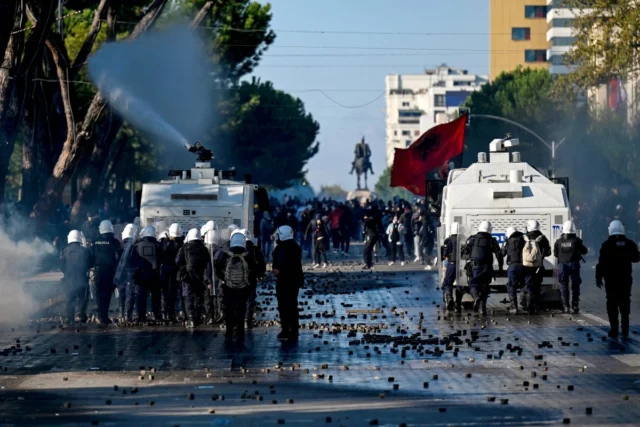
The EU Delegation did not have those numbers when it spoke, at midday on Wednesday 14 October. It had the night before them: molotov cocktails at the Ministry of Education on 13 October, a market burned, the flag of the Holy See torn from the Nunciature, police lines under stones. With that in front of it, it said it was aware of allegations of excessive force by the police, asked that police action be proportionate and that the allegations be investigated as a priority, and called everyone else “all parties”. The police got a name. The people who threw the molotovs got a plural noun.
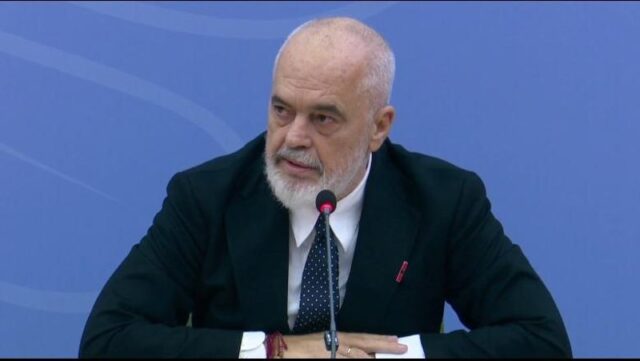
Edi Rama said today that the disproportion is real. He is right, and the count says which way it ran. A force that takes 200 injuries and gives 80 has been standing in a stone shower with a shield. The Delegation has had six days of figures since 14 October. It has not revised the word.
The Delegation represents governments that have been policing the same autumn. In France, police used stun grenades on schoolchildren until a 14-year-old lost his teeth to a gas canister fired at his face; by 7 October, 6,100 people had been arrested, most of them minors; last Saturday brought 2,300 arrests, a protester’s hand blown off by a police grenade, a minister admitting the police had lost control, and curfews. In Spain the police fired rubber bullets in Valencia. Brussels asked Paris for proportion once, about the minors, and condemned the violence against the police in the same sentence. Nobody asked Madrid. Tirana’s police used tear gas and water cannon. No rubber bullets, no grenades, no curfew.
Standing at equal distance from the one who throws a molotov and the one who takes it is wrong. Everyone in this city knows it, and so does everyone in the Delegation building. It is also not neutral in practice. A masked crowd does not read Delegation statements. The people who speak for it do, and on 14 October they read that Europe had put the police under suspicion. The statement went out at midday. By nightfall 89 people were in hospital.
On Thursday 15 October the Delegation found the sentence: violence has no place in democracies. Nothing in the record was new that Thursday. The ministry had been attacked on the 13th, the market had burned on the 13th, the police had been bleeding since the 13th. The only thing that changed between Wednesday noon and Thursday was inside the building.
That is where the inspection this publication asked for on 16 October should start. Either the fire was not in the Ambassador’s briefing on the morning of the 14th, or it was and the police still came first. Both are questions for the building: who briefed her, what the political section reported to Brussels, who wrote the word proportionate, and what happened overnight to produce Thursday’s text. The Union asks Albania to find out who decided and why when an institution gets it wrong. The Delegation can be asked the same.
The Delegation does not owe Tirana an apology. It owes itself the answer, so that the next time this city burns, the first word out of the Union’s mouth is not addressed to the men holding the shields.
Two hundred to eighty is the count. Somebody briefed the Delegation the other way round. The inspection is how we find out who.