This desk asked for evidence in place of verbs. On Friday a prosecutor went to fetch it. What SPAK must look for, who answers for what, and the one way the investigation could finish what the tape began.
Drizan Shala, Security Desk
At midday on Friday, Albanian media reported, agents of the National Bureau of Investigation searched Ron Yeffet’s villa in Pëllumbas. By afternoon, the same reports said, they had been to the homes of KAYO’s administrator and TIMAK’s owner and had taken documents out of the Ministry of Defence. On 30 September this desk called SPAK’s request for the raw tape “the single correct institutional act in the affair”. Friday was the second. We asked for evidence in place of verbs, and a prosecutor has gone to fetch it.
Nobody else can. For twenty-five days Albania has stood convicted of arms trafficking on cut segments of a three-hour recording. The majority voted down an inquiry. The minister answered at a party door. The opposition gave its verdict on 8 September and renewed it on Friday afternoon, when Klevis Balliu wrote that SPAK must search “the home of Ron Yeffet’s boss, Edi Rama” (“banesën e shefit të Ron Yeffet, Edi Ramës”). A compliance officer in a partner capital believes none of them. He will believe a prosecutor’s signature under a dated decision. The state’s interest today is to be searched completely and quickly.
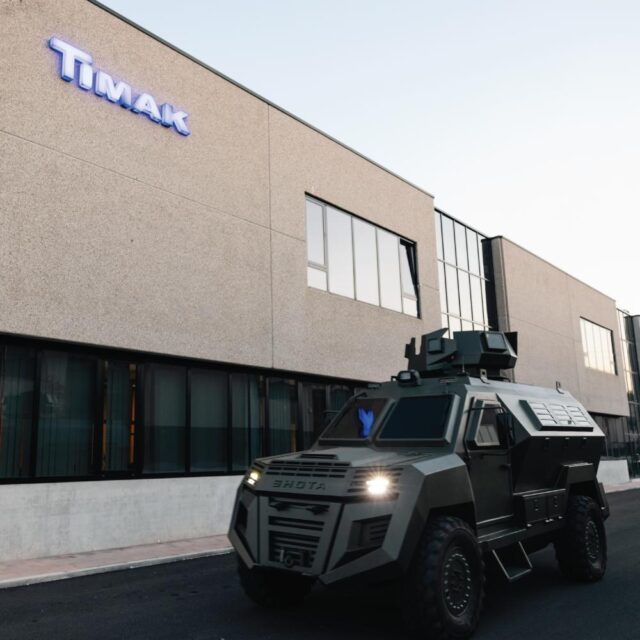
What is at stake is larger than one man’s companies. KAYO is two years old and exists to bring Poliçan, Gramsh and Mjekës back to work, through ventures in which foreign partners put their capital and their names beside Albanian factories. A senior defence official has confirmed to this publication that partners have asked for additional compliance review and that at least one signing has slipped. Those partners are waiting for a prosecutor, and every week they wait is a week in which a contract can go to a competitor in the region. An investigation done properly is the only protection that industry has left.
The 30 September piece listed what nobody had shown: a shipment, a payment, an end-user document, a government order, a route from Sudan to Albania. Each of those exists on paper or does not exist. Arms move on export licences, brokering registrations, transit permits, end-user certificates, customs entries and bank transfers. Pull every one that carries the name of Yeffet, TIMAK, Timak Defence or KAYO. Open the accounts and ask the financial intelligence unit what it holds. On the tape Yeffet complains that “they said I received 3 million euro, show me the money”. Show it, or show there was none.
KAYO’s head says the plants produce nothing and could package nothing. Walk the floors at Poliçan, Gramsh and Mjekës and put that in a report. Check the border records for the Sudan trip Yeffet is reported to claim in the segment aired on Thursday night. He carries American and Israeli passports, and both countries regulate what their citizens broker. Ask Washington and Jerusalem. Ask Kyiv who the visitors were. “Partner services stand behind it”, the country was told on 11 September. Ask the partner services, in writing.
No prosecutor can prove that something never happened. A deal kept off the books leaves no licence, which is why the search has to go past the licence office to the accounts, the factory floors, the border and three foreign capitals. If every one of them comes back empty, the story told since 7 September has nothing left to stand on, and SPAK should say so in those words.
The tape itself is the first exhibit and SPAK may not have it. Reports on 9 September said investigators took the broadcast from YouTube and that the head of SPAK, Klodian Braho, signed a request to Syri TV for all the material, the raw recordings included. Three weeks later a new segment went out on the same programme. SPAK needs all three hours in the original file from the device that made it, examined for cuts and for the order of the segments, with a certified transcript of the English, the Ukrainian and the Russian. If the station has handed that over, SPAK should say so. If the file is still in Switzerland, released a few minutes at a time on television by a man SPAK has wanted since 2023, a letter rogatory goes to Bern for the recording and for his testimony, and the country learns who is holding up its acquittal.
The company in whose office the recording was made has said through its lawyer that it was unauthorised. Who made it, who asked for it, to whom it was offered before it reached a studio, and how it came into the hands of a fugitive are questions with witnesses. This desk published its reconstruction: a recording commissioned in a dispute over the Delvina gas field, offered abroad, declined, and put on air when it found a political use. SPAK can test every line of that. The three foreign participants can be identified from border and residence records. Two Ukrainian names entered circulation on 8 September from one social-media post. Ask its author for the basis. If the charge was manufactured, its manufacturers should answer in the same file.
Since 7 September the portals have printed a list as if it were an indictment: Yeffet with 49 per cent of TIMAK, which holds 80 per cent of Timak Defence; Yeffet and Arjeta Puca as partners in UNO18, which holds 80 per cent of Advanced Arms Technology; then Timak Aviation and a horse club. Every item on it comes from the business registry, where anyone can read it. Registering a company is not an offence. Buying shares is not an offence. Knowing officials is not an offence. A private partner holding the majority of a joint venture with a state company is the model KAYO was built on, and a government may be criticised for the model without anyone having broken the law. Wanting to be rich, which Yeffet says on the tape, is not an offence either.
An offence is an act, with a person, a date, a document and a benefit attached. A licence obtained by a payment. Public money moved without a procedure. An official with an undeclared interest. A beneficial owner hidden behind a nominee. A state asset passed to a partner below its value. A weapon moved without papers. Share structures and beneficial owners are legitimate leads, and SPAK should follow every one of them to see whether an act of that kind sits at the end. Its warrants and decisions should then name the act. A registry extract printed as proof of wrongdoing tells every foreign company considering a factory in Albania that incorporation there is a risk, which is the message the tape was used to send.
The state has questions to answer too, and this desk raised them on 30 September. Yeffet bought into TIMAK seven weeks before TIMAK and KAYO formed Timak Defence. Three months later UNO18, the company he runs, became KAYO’s partner in a second venture. Who chose the two partners? Who vetted them, and when? Was any public money committed, and under what procedure? If the tender files reported taken from the ministry on Friday show favours, that is a procurement case and should be charged as one. Put the same questions to every KAYO venture, so that the result is a standard and one man does not carry it alone.
A broker can sell a factory’s product. He cannot sell a state’s signature. Some of what Yeffet says on the tape is what any intermediary may say without asking anyone: I know people, there is business in Africa, I can bring you a partner. That binds nobody. Some of it would need a written mandate: presenting the company’s capacity, carrying an offer, negotiating in its name. Whether he had one is answered in a filing cabinet, by a contract, a power of attorney or a board minute. The registry makes him a partner on the private side of two KAYO ventures and the administrator of UNO18, which is a seat in those companies and no authority to speak for KAYO. By his own words the deal he was pitching was “not KAYO”.
And some of his sentences no mandate could cover. A cabinet vote “on Monday”, an official who “will be in touch”, “I’ll deal with them”: no state company can delegate a cabinet decision, a licence or a minister’s time to a salesman. A broker who promises those has left any mandate at that sentence. They can also be checked. Cabinet decisions are published, so read that week’s. The tape names a deputy secretary general who “will be in touch”. Establish from records whether he ever was. Nothing published so far says so, and a prosecutor’s finding to that effect is worth more to Ermal Nufi than any doorstep answer. Ask the Ministry of Energy for its Delvina file. When the translator proposed writing to that ministry, Yeffet said “no official letter”. A man with a ministry behind him does not refuse to write to it.
Criminal liability is personal. Yeffet answers for Yeffet. If he sold access he did not have, SPAK should test that against the offence of trading in influence, with the state as the party he injured. If he took money for it, the question is fraud. If he moved one crate anywhere, SPAK should establish what jurisdiction his Albanian citizenship gives it. Clearing the state does not clear him, and this desk has no interest in clearing him. Where the law lets a company answer for what was done in its name, that belongs in the file too.
An official is reached only through his own act: a signature, an instruction, a meeting, a payment received, a licence issued. Being named by a salesman is not an act. A search is not a charge, and a ministry whose papers are taken may be a witness. “The government” cannot stand in a dock. What the state owes is political, in how it vets its partners and what it discloses, and international, because it answers to its allies and to the embargo regimes for what leaves its territory and for what its citizens broker. It meets that second duty by doing what SPAK did on Friday.
Charge a man if the evidence names a man. The factories are not defendants, and neither are the ventures in which he has no part. SPAK should say which companies are under investigation, so that the others can sign. It should leave KAYO copies of what it takes, so that a state company under search can still answer its partners’ questions.
If SPAK finds no shipment, no payment, no licence, no mandate and no act of state behind the trafficking story, then that story was built from material that never proved it, whatever else the file turns up. If it charges the broker alone, the state has been used and clears its name by prosecuting him. If it finds faults in procurement and no trafficking, KAYO’s management answers for what this desk already called a management failure. If it finds an official’s act linked to the broker’s, the opposition has its story, with a document at last. This desk will print whichever SPAK finds. The ministry should open every drawer and say that it has. The opposition, which wants the prime minister’s house searched, should say now that it will accept a closure signed by the same prosecutor.
Abroad, none of this is believed without a record. Which offences are registered, and against whom. Separate answers to separate questions: whether arms were trafficked, whether procurement was proper, whether Yeffet had the access he was selling, whether the state vetted its partners, and what happened at Delvina. One broadcast welded them into a single charge. A reasoned decision at the end, in English, with a date on it, because its readers are compliance departments. And an end: a file marked “arms trafficking” that stays open for two years does the tape’s work at a slower speed.
It also has to keep its own file shut. By mid-afternoon on Friday the file number, the court’s approval of a personal search and the kind of papers carried out of the ministry were on the portals, credited to “sources”. Headlines had investigators “landing” (“zbarkojnë”) at the Ministry of Defence. SPAK had issued no statement. Restricted procedural information reached the public before any official word, and how it got there should itself be established.
Albania has just watched material from the file on its intelligence director travel through the media. Every communication of an intelligence chief is sensitive by default, because nobody outside the service can know which detail is of value to a hostile one. A defence ministry’s cabinets are the same kind of place. They hold classified contracts, allied material and the commercial secrets of foreign partners. What came from NATO or from a partner government belongs to its sender, and no Albanian prosecutor may disclose it.
So take everything the investigation needs, and let none of it appear in a portal. Handle those papers with cleared officers and sealed custody, with the classified-information authority in the room. Keep their content out of court decisions that will be photographed and passed around. Approach the foreign partners in KAYO’s ventures through official channels, and keep their names out of the press. Say in a communiqué, the same day, whether the ministry was visited as a suspect or as the keeper of documents. Open an inquiry into Friday’s disclosures, and publish its result.
The tape told the alliance that Albania’s defence industry might be a racket. A leaking investigation tells it that Albania cannot keep a defence file closed. Partners can wait out the first. They do not sign with the second.
Take every document. Publish every decision. Leak nothing. And finish.
Drizan Shala is a security researcher and doctoral candidate at the University of Sarajevo. He writes on defense, private security, and the security architecture of the Western Balkans.