What Albanian law says about the file SPAK has opened: what counts as evidence, how the state buys military equipment, who may open a classified page, and who answers if one reaches a portal.
Renada Bici (Legal Desk)
A prosecutor’s file now sits between the Ministry of Defence and the public. On Friday, according to Albanian media, investigators acting on the orders of the Special Prosecution, SPAK, searched the Ministry of Defence and took documents. The Special Prosecution has issued no statement. News24 reported on Saturday, citing sources, that it has registered two offences, breach of equality in tenders and abuse of office, and is investigating them “for the moment” (“për momentin”). Tirana Examiner understands that prosecutors are examining whether a defence purchase should have gone to tender. Albanian law settles several things about that file before anyone opens it: what it is, how the state buys military equipment, what a prosecutor may do with a classified document once he holds it, and who answers if a page gets out.
The Criminal Procedure Code describes a prosecutor as acting “in the name of the state” (“në emër të shtetit”, Art. 24). When the file concerns the Ministry of Defence or the State Intelligence Service, that phrase carries a duty at every step: what is asked for, how it is taken, where it is kept, and which words are used in a court request or a press statement. An investigation into the state’s defence cannot be run like an investigation into a municipal contract, and a prosecutor should know that before the first warrant, since the law says so in several places.
What the file is
According to reports, the prosecution opened the proceeding on its own initiative. The Criminal Procedure Code allows that whenever a prosecutor learns of a possible offence, from any source (Art. 280). The source here was a television broadcast. The man who made it, Arben Ahmetaj, is a defendant in a case brought by the same prosecution office and has been wanted since 2023. So far as is public, he has filed no criminal report, which would have exposed him to the offence of false reporting (Criminal Code, Art. 305), has given no statement to a prosecutor and has not handed over the recording he says he holds. What he supplied was commentary on excerpts.
None of that is evidence in the Code’s sense. The Code defines evidence as information about relevant facts obtained from sources provided by procedural law and according to its rules (Art. 149). During preliminary investigations evidence is taken by the proceeding authority under the Code, and evidence obtained in breach of statutory prohibitions may not be used (Art. 151). A fact may not be inferred from indications unless they are “serious, precise and consistent” (“të rëndësishme, të sakta dhe në përputhje me njëra-tjetrën”, Art. 152.2). If Ahmetaj is later questioned and his existing proceeding is legally connected to this one, Article 152.3 requires his declarations to be assessed together with other evidence that confirms their truthfulness.
Political statements have no status at all. The thirty-nine deputies who asked for a parliamentary inquiry wrote in their own request that the statements and materials “are not considered proven facts, but indications” (“nuk konsiderohen fakte të provuara, por indicie”). The majority rejected the request. What parties have said since is speech.
The file therefore contains a prosecutor’s verification and, since Friday, the product of searches. Arms trafficking, the offence the broadcast alleged, is not one of the two offences News24 reported. A court orders a search when there are “grounded reasons to think” (“arsye të bazuara për të menduar”) that evidence may be found in a place (Art. 202). It is a way of looking. No person is known to have been taken as a defendant, and until one is, the Code forbids even the publication of what the prosecutor has entered in his register (Art. 287.3). Everyone named on television is presumed innocent until a final court decision (Art. 4).
In this proceeding the state is the investigating authority. A ministry can be the place where an offence is looked for, but it cannot be the defendant: the Criminal Code excludes state institutions from criminal liability (Art. 45), and guilt attaches to persons for their own acts. Arms trafficking by the state has no legal content unless a named official is shown to have acted. International law reaches the same result through its rules of attribution, under which a state answers for its organs and for private persons acting on its instructions.
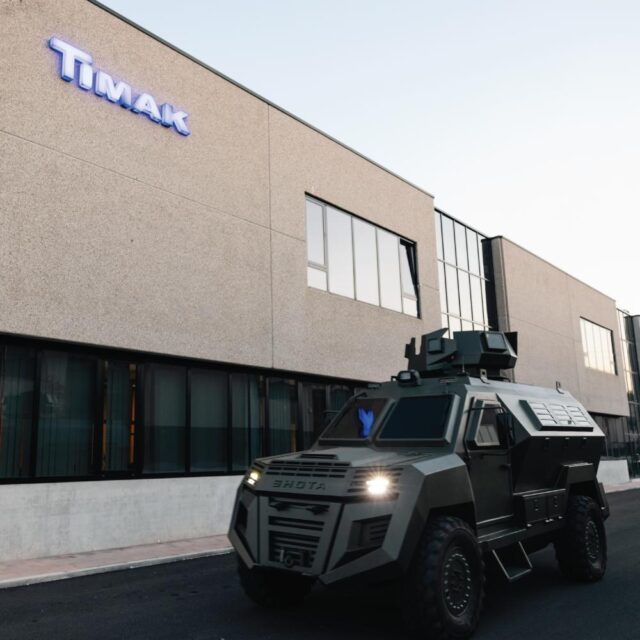
The companies stand further off still. KAYO, the state defence company created by Law 88/2024, is a joint-stock company with its own legal personality, and its obligations do not pass to the state budget (Arts. 3 and 6.2). The ventures it has formed are separate companies again. In the two ventures named in Saturday’s report, Timak Defence and Advanced Arms Technology, KAYO holds 20 per cent. The interests of Ron Yeffet, the businessman heard on the recording, sit on the private side as that report describes them, in the companies that hold the other 80.
What the state owes is regulation, and it has legislated it. Law 87/2024 allows trade in military goods only to licensed entities (Art. 12) and counts intermediation as trade (Art. 6). It forbids any licensee a transaction whose parties cannot all be identified, whose transport cannot be traced at every stage, or whose destination is under a United Nations or European Union embargo (Art. 29). The Criminal Code punishes the import, export, transit and trade of arms “contrary to the law” (“në kundërshtim me ligjin”) with seven to fifteen years (Art. 278/a). The conduct described on television would be unlawful for every company in the sector. If anyone engaged in it, the law that forbids it is the state’s, and so is the prosecutor.
How the state buys military equipment
The vocabulary of Albania’s corruption cases does not travel into this file unchanged. “Tender”, “procurement” and the charge the press shortens to “inequality in tenders” (“pabarazi në tendera”) took their everyday meaning from cases about roads and police uniforms, where the law demands a published notice, open competition and a winner chosen among bidders. Defence law uses the same words for something else. Law 36/2020 defines procurement in this field as a restricted procedure, negotiation with or without prior notice, or competitive dialogue (Art. 4). It contains no open tender. A contracting authority chooses between a restricted procedure and negotiation with prior notice (Art. 24). Negotiation without notice is allowed in listed cases, among them where “for reasons connected with exclusive rights” (“për arsye që lidhen me të drejtat ekskluzive”) only one operator can perform the contract (Art. 28.1.d).
Some purchases fall outside the law altogether. Article 5 excludes procurement where applying the law “would oblige the state to disclose information” (“do ta detyronte shtetin të zbulonte informacione”) contrary to its defence and security interests. It also excludes contracts for equipment designed or adapted for military purposes and for arms for operational use. That second exclusion needs an act: classification is made by a special commission in the Ministry of Defence, and excluded purchases are governed by other legal acts or by a government decision (Art. 5.2).
In a road contract, a single bidder, an unpublished notice, a contract concluded in weeks and a file closed to the public are four warning signs. In a defence purchase each of them can be what the law prescribes. A prosecutor who reads the second file with the habits of the first will find irregularity in the very procedure the legislator designed.
The ministry’s officials are therefore right that defence buying is different, and the difference has paperwork. For any contract SPAK questions, the file should show which route was used: a procedure under the law, the single-operator ground with its written justification, or an exclusion with the commission’s decision dated before the contract. The law that created KAYO offers no fourth route. It applies defence-procurement legislation to defence contracts (Law 88/2024, Art. 14), and nowhere allows the ministry to buy from a KAYO venture by reason of the state’s 20 per cent.
The contracts in question may not be purchases at all. The same report says prosecutors are examining suspicions that Yeffet’s companies “were favoured by state officials” (“janë favorizuar nga zyrtarët shtetërore”) in concluding contracts, which could equally describe the way KAYO’s private partners were chosen. That choice is governed by Article 10 of Law 88/2024, and it has three routes of its own. KAYO may run a competitive procedure, bound by principles that include equal treatment (10.4). It may receive a request for cooperation from an outside party, which a negotiating group assesses and the Supervisory Board approves (10.5). Or it may select a partner directly, where the Defence and Security Committee assesses that the cooperation concerns the state’s defence and security interests (10.6). In each case the terms of negotiation need a decision of the Council of Ministers (10.3). If the partners came through the competitive route, equality of participants has something to attach to. If they came through either of the others, the law required no competition, and the question is whether the decisions that route demands exist and were lawfully taken.
Law 36/2020 treats its own breach as an administrative offence, punished by fine, “when it does not constitute a criminal offence” (“kur nuk përbën vepër penale”, Art. 61). Article 258 of the Criminal Code carries the title “breach of the equality of participants in tenders or public auctions” (“shkelja e barazisë së pjesëmarrësve në tendera apo ankande publike”), and it is written for tenders. It punishes an official who acts against “the laws that regulate freedom of participation and the equality of citizens in tenders and public auctions” (“ligjet që rregullojnë lirinë e pjesëmarrjes dhe barazinë e shtetasve në tendera dhe ankande publike”), in order “to create unfair advantages or privileges for third parties” (“për të krijuar avantazhe ose privilegje të padrejta për të tretët”), with one to five years where the value exceeds 800,000 lek. Two things have to be proved: the breach of a procurement rule that applied, and the purpose of favouring someone. Where the law itself removes a purchase from competition, there are no competitors whose equality was breached, unless the prosecution first shows that the exclusion was unlawful or a pretext.
Abuse of office (Art. 248), the second offence in the report, needs no tender. It punishes a person exercising public functions who intentionally acts or fails to act against the law, where that brought an unjust benefit or damaged the lawful interests of the state, with up to seven years, and it applies only “if it does not constitute another criminal offence” (“nëse nuk përbën vepër tjetër penale”). It still requires a law that was broken and the intent to break it. Whether a given purchase was a lawful exclusion, an administrative fault or a crime is decided by documents, and most of them are classified.
Both offences belong to officials. Article 258 speaks of a person “charged with state functions or in public service” (“i ngarkuar me funksione shtetërore apo në shërbim publik”), and Article 248 of a person who “exercises public functions” (“ushtron funksione publike”). A businessman can answer for either only as an accomplice (Arts. 25 to 27), and an accomplice needs a principal who holds an office. Another portal’s headline on Saturday read “SPAK announces 2 criminal offences for Ron Yeffet” (“SPAK shpall 2 vepra penale për Ron Yeffet”). The Special Prosecution had announced nothing, and neither offence can be committed by a businessman on his own.
Article 75/a of the procedure code places the second paragraph of Article 258 on the Special Court’s list of offences: breach of equality in a tender or public auction worth more than 800,000 lek. Abuse of office and arms trafficking are not on that list as offences in themselves, although they may come before the Special Court where the person charged is one of the officials named in Article 75/a, where a criminal organisation is involved, or where another ground of special jurisdiction applies. The published account does not say which paragraph of Article 258 has been registered or on what jurisdictional basis. That is another reason not to let the word “tender” do more work than the law gives it.
What a prosecutor may do with a classified file
The procedure code itself recognises that some offices are not searched like others. When documents are to be seized in the offices of the intelligence services, the court must set out in its decision “in detail” (“në mënyrë të detajuar”) the documents, acts or objects to be taken, and the prosecutor examines them and takes “only those that are necessary for the purposes of the investigation” (“vetëm ato që janë të domosdoshme për qëllimet e hetimit”, Art. 211/a). Where a document was created by a foreign service and handed over on condition that it go no further, examination stops while the foreign side is consulted. That article names the intelligence services. A defence ministry holds the same kinds of paper, and the Code and the classified-information law reach it by other routes.
SPAK may seize classified material from the ministry, and the Code builds a filter into that seizure too. A person bound by state secrecy must hand documents to the proceeding authority “except when they declare in writing that it is a state secret” (“përveç kur deklarojnë me shkrim se është sekret shtetëror”, Art. 211.1). The proceeding authority then seeks confirmation from the competent authority. Where state secrecy is confirmed and the evidence is essential to resolving the case, the Code provides for the proceeding authority to take the evidence, and if no confirmation arrives within thirty days it orders the seizure (Arts. 211.2 and 211.3). Officials questioned as witnesses are under a parallel rule. They must not testify about state-secret facts, and if secrecy is confirmed but the evidence is essential, the proceeding is suspended until the highest body of the state administration responds, after which the witness must testify (Art. 160). Whether the ministry invoked these rules on Friday is not known.
Once a classified document is taken, Law 10/2023 on classified information governs it: “the proceeding authority applies the provisions of this law” (“organi procedues zbaton dispozitat e këtij ligji”) for its registration, use, administration and storage (Art. 19.4). That law’s definition of public administration names “the courts, the prosecution offices of every jurisdiction, the National Bureau of Investigation” (“gjykatat, prokuroritë e çdo juridiksioni, Byronë Kombëtare të Hetimit”, Art. 4.2). It also lists what may be classified, and the list includes the equipment and modernisation of the Armed Forces, plans for the security of senior Albanian and foreign dignitaries, and classified documents in defence procurement (Art. 10).
Classified information may be used only in the performance of a duty, on a need-to-know basis, with the approval of the head of the institution, and only by appropriately certified persons (Art. 19.1). Access requires three things together: a need to know arising from the post, a prior security briefing, and a personnel security certificate, which only the national security authority, AKSIK, can issue (Arts. 27 and 28.1). The one exemption from the certificate is material at the lowest level, “restricted” (“I kufizuar”). The law relieves three office-holders of security vetting: the President, the Prime Minister and the Speaker (Art. 28.2). Prosecutors, judges, investigators and court clerks are not on that list. Inside the Special Prosecution and the Special Court, anything above “restricted” may be opened only by a certificate-holder.
Seizure does not change the document’s status. The authority that classified it is the authority that declassifies it (Art. 22.6). A court may request declassification of seized material (Art. 22.2), and until that is granted the document stays classified in the case file, in the court’s reasoning and in every copy served on the parties. Information that originated with another institution cannot be disclosed without that institution’s authorisation (Art. 6.3), and NATO and EU material carries its own protection (Arts. 57 to 60). Publication cures nothing: “classified information is not declassified as a result of the unauthorised exposure of identical or similar information” (“nuk deklasifikohet si rezultat i ekspozimit të paautorizuar”, Art. 22.3).
The law also guards against the opposite abuse. It forbids any classification made in order “to hide the non-application of laws, inefficiency or errors of the public administration” (“të fshehë moszbatimin e ligjeve, paefektshmërinë apo gabimet e administratës publike”, Art. 11). A prosecutor who believes a stamp conceals an offence has two remedies in the statute. AKSIK can require an irregular classification to be lifted (Art. 17), and the court can request declassification of what has been seized. Both run through institutions.
The stamp is not the only protection. Much of what a defence ministry knows about its purchases carries the lowest marking or none, and is still kept from the public: what was bought, in what number, with what capability, from whom, and where it will stand. Until a preliminary investigation ends, no act of the file may be published, even in part, whether secret or not (Criminal Procedure Code, Art. 103). Suppliers’ technical and commercial information is confidential under the procurement law (Law 36/2020, Art. 9). Law 87/2024 orders the Defence Industry Agency and other state institutions to prevent the disclosure or misuse of commercial and industrial secrets as well as classified ones (Art. 21.2). Law 88/2024 says the acts of KAYO’s partner-selection procedures “are not made public if this conflicts with the interests of the state in the field of defence and security” (“nuk bëhen publike nëse kjo bie ndesh me interesat e shtetit në fushën e mbrojtjes e të sigurisë”, Art. 10.7), and lets authorities use KAYO’s commercial data only for the purpose for which they obtained it (Art. 24.4).
What the ministry has not made public about its equipment should reach the public, if at all, by the ministry’s decision. A prosecutor who takes a document acquires the power to use it in the proceeding. A reasoned decision under Article 279 of the procedure code can lift the secrecy of an investigative act, but declassification remains with the authority that classified the document (Law 10/2023, Art. 22.6), and the confidentiality that the procurement and defence-industry laws attach to suppliers’ and commercial information is untouched by it. If the case reaches a courtroom, the ministry may ask for the hearing to be closed where publicity would spread “data that must be kept secret in the interest of the state” (“të dhënave që duhet të mbahen sekret në interes të shtetit”, Art. 340), and the acts of a closed hearing may not be published either.
The duty runs through every act of the proceeding, and most of it is already written down. A warrant that names its documents and a seizure limited to what the investigation needs, the standard Article 211/a sets for intelligence offices, cost nothing at a ministry. A request for evidence addressed to a foreign authority goes through the Ministry of Justice, which may refuse to forward it where “the security or other important interests of the state” (“sigurimi ose interesat e tjera të rëndësishme të shtetit”) could be endangered (Art. 509). Court requests and decisions that rest on classified exhibits can identify them by number and leave their content out of the reasoning.
The Code knows a search (“kontroll”) and a seizure (“sekuestrim”). Friday’s headlines had the Special Prosecution “landing” (“zbarkon”) at the ministry and “raiding” (“bastis”) a residence, and the Code contains neither verb. A purchase that the law excludes from the procurement regime was never a tender, and calling it one in a court request or a press statement asserts a breach before anyone has proved it. What a prosecutor writes about a NATO member’s defence ministry is read in allied capitals as well as in Tirana.
A defence file therefore cannot be handled the way corruption files have been handled in Tirana, where material from the prosecutor’s dossier has repeatedly reached the media. The statute requires a security officer in each institution (Art. 72), a unit that registers, stores and alone may copy classified material (Arts. 18 and 19.2), and systems accredited by AKSIK for keeping or transmitting it. A classified page scanned into a case-management system, or sent by e-mail, is already a security breach if the system or channel has not been properly accredited by AKSIK (Art. 75.3).
Who answers for a leak
The procedure code makes investigative acts secret until the defendant has learned of them, unless the prosecutor authorises the publication of particular acts by reasoned decision (Art. 279). No such decision is known. By Friday afternoon a court decision and a list of what had been taken, contracts, computers and telephones, were in the portals, attributed to sources. By Saturday News24 had published the offences it said were registered, the length of the search at the ministry, the seizure of a senior ministry official’s telephone and the signing of the first witness summonses. It attributed part of its account to Bureau investigators (“sipas hetuesve të BKH-së”). Whether any investigator spoke is not established, and the attribution is the outlet’s.
For classified material the rules are stricter. A security breach is any act or omission “by anyone” (“nga cilido”) against the rules, whether or not it ends in exposure to an unauthorised person (Law 10/2023, Art. 73.1). Every breach involving the theft, taking, handing over, loss or leak (“rrjedhje”) of classified information must be reported immediately to the institution’s security officer, through him to its head, and to AKSIK, and the head must set up a commission to examine it (Art. 74). Failing to report is itself listed as a serious breach (Art. 75).
The law distributes responsibility by name. The person who commits a breach answers for it. The head of the institution bears legal and administrative responsibility for specified failures, including storing or transmitting classified information on systems not properly accredited by AKSIK, obstructing inspections and failing to implement AKSIK’s recommendations (Art. 76.1, read with Art. 75.3). Failure to enter classified material in the proper register is assigned to the employee of the unit responsible for classified information (Art. 76.4). For this file the institutions are the Special Prosecution, the Bureau of Investigation and the Special Court, and the heads are theirs.
Administrative fines, 100,000 to 200,000 lek for a serious breach, are the smallest consequence. A breach is administrative only when it “does not constitute a criminal offence” (“nuk përbën vepër penale”, Art. 73.2), and the Criminal Code has the offences ready. A person entrusted with a state secret who reveals it faces up to five years, and up to ten when it is done publicly (Art. 294). Anyone else who came to know it and spreads it faces up to three years, five if publicly (Art. 295). Article 295/a names the offices: “the prosecutor or the judicial police officer” (“prokurori ose oficeri i policisë gjyqësore”) who discloses secret acts, or who disregards the obligations of Article 103 of the procedure code, is punished with one to five years. Investigators of the Bureau are judicial police officers, and their statute binds Bureau staff to “keep the secrecy of criminal investigations” (“ruajnë sekretin e hetimeve penale”, Law 95/2016, Art. 40). Article 295/a also gives up to three years to a public official who discloses a commercial or industrial secret he is bound to keep. Losing a secret document entrusted to one’s care is an offence in itself (Art. 296).
These offences are committed by persons. A prosecution office and a court cannot be charged. The prosecutor, the investigator, the clerk or the judge who held the document can be.
For magistrates there is a second track. The law on their status forbids them “to make public data or information on the cases assigned” to them (“të bëjë publike të dhëna ose informacione për çështjet që i janë caktuar”, Law 96/2016, Art. 7), and lists breach of “the rules of confidentiality and non-dissemination of information” (“rregullave të konfidencialitetit dhe të mospërhapjes së informacionit”) among the disciplinary offences (Art. 102). The High Justice Inspector investigates on a complaint from any person, from the Minister of Justice or from the head of the court or prosecution office, or on his own initiative, and does so regardless of any parallel criminal case (Arts. 119, 123 and 124). The sanctions run from reprimand to dismissal, and include removal from the Special Prosecution or the Special Court to an ordinary office (Art. 105).
The state does not have to wait for a leak to prepare that path. The ministry can make the handover traceable: through the classified-information unit, against signature, to recipients with the required clearance. It can ask AKSIK, which may inspect any institution that holds classified information (Art. 69), to verify that the receiving offices have a security officer, a classified registry and accredited systems. If a classified page then appears in a portal, the list of people who could have released it is short and written down. The ministry’s officials would be obliged to file a written criminal report, which the Code requires of public officials “even when the person to whom the offence is attributed has not been identified” (“edhe kur nuk është individualizuar personi”, Art. 281).
Who investigates such a report depends on who is suspected. Under the law that created the Special Prosecution, special prosecutors “investigate and prosecute prosecutors of the Special Prosecution or judges of the courts against corruption and organised crime” (“hetojnë dhe ndjekin penalisht prokurorë të Prokurorisë së Posaçme ose gjyqtarë të gjykatave kundër korrupsionit dhe krimit të organizuar”, Law 95/2016, Art. 14). A secrecy offence by a Bureau investigator, a clerk or another employee is not assigned to SPAK by that article. For a suspected leak by a special prosecutor, the law as it stands leaves SPAK investigating one of its own. Draft amendments reported on 30 September would send special prosecutors and Special Court judges accused of anything outside corruption and organised crime before ordinary prosecutors and courts. The Association of Prosecutors has criticised the draft as a whole. On this point the rule is the sound one: an institution cannot credibly investigate a leak from its own safe.
The classified-information law binds everyone else who touches the file: the ministry, KAYO, its private partners, defence lawyers and newspapers. “Every individual has the duty to protect classified information under this law, regardless of how he came to possess it” (“Çdo individ ka për detyrë që të mbrojë informacionin e klasifikuar sipas këtij ligji, pavarësisht nga mënyra se si ai ka arritur ta posedojë”, Law 10/2023, Art. 6.6). That includes this newspaper.
SPAK is entitled to every document it needs, and the state’s interest is that it reads them. Before it asks for the next one, it should identify which legal regime governs the act it is investigating. The law asks that it read under seal, decide on acts, and return a finding. A prosecution that can produce a clean custody record at the end of this case will have protected the ministry’s secrets and its own authority together.