A veteran of 1997 says the quiet part first: Albania is a democracy, and in a democracy governments change through votes.
Tirana Examiner Newsroom
Daniel Serwer has seen Tirana burn before. He was in Albania in 1997, after the pyramid schemes collapsed and the state with them, and he told Top Channel’s Muhamed Veliu this weekend what that taught him: violent protest destabilises a country and discredits the cause it claims to serve.
The sentence worth keeping from the interview is not the one about 1997. It is the one he opened with. “Violence is unacceptable in democratic societies like Albania,” said the Johns Hopkins professor and former State Department diplomat.
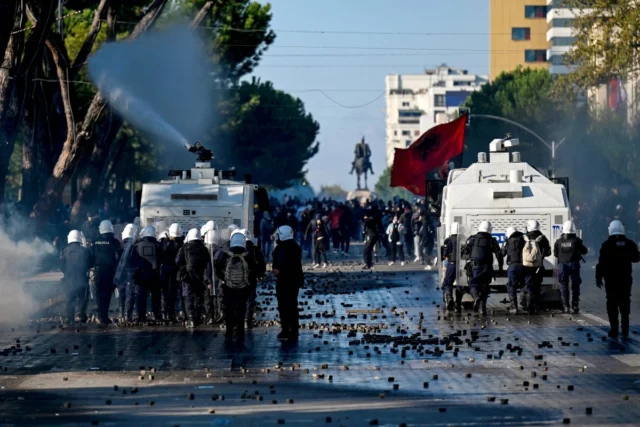
Democratic societies like Albania. For six days the street has run on the opposite premise: that there is no vote worth waiting for, that the government cannot be removed any other way, that disobedience is the only door left. Serwer, who has known Sali Berisha for decades and is nobody’s apologist for Edi Rama, does not accept that premise. Albania, in his reading, is a functioning democracy with a grievance problem, not a dictatorship with a protest.
The distinction decides everything that follows. In a democracy, “any kind of change must come through the vote, by peaceful means.” Grievances are real; he lists them himself, from students to construction. The remedy for real grievances in a democracy is a ballot, and “violence does not bring votes.”
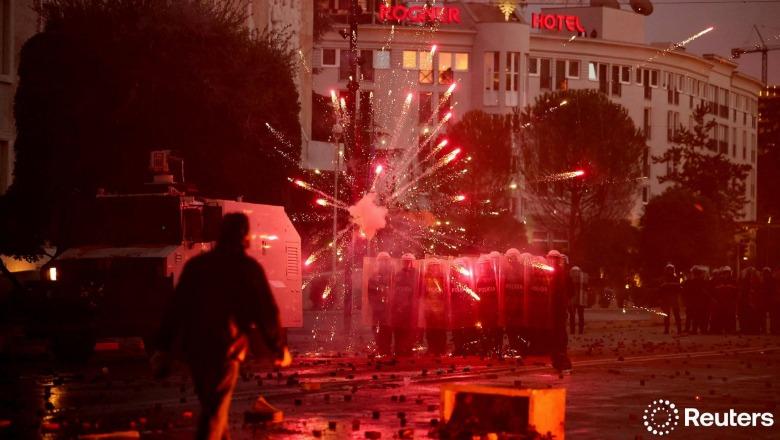
On Berisha’s call for civil disobedience, Serwer offered the textbook definition and then the pointed question. Civil disobedience is passive resistance: the police tell you to move, you do not move, they arrest you, and you do not fight them. “I do not know how Sali Berisha understands civil disobedience in Albania,” he said. The Molotov cocktails thrown at Police Station No. 3 this week answer that question for him.
Then the line Berisha will not enjoy. “Sali and I are both too old to stand at the top of a mountain. It is time for new leadership.” Serwer places it in a regional pattern, leaders who stay too long, and says Berisha is not alone in it. The opposition leader has spent a week arguing that Albania’s problem is one man in the Prime Minister’s office. A friend of thirty years has just told him the problem includes the man leading the protest against it.
Asked about Rama’s claim of “foreign hands,” Serwer declined to speculate from Washington. What he did say is that neither the United States nor Europe wants to see violence in a NATO ally on the path to EU membership, and that the violence makes that path harder. That is the one point on which the professor and the Prime Minister agree, and it is the one the organisers of the protest should weigh most carefully.
Serwer closed with a warning aimed at his own government rather than Tirana. He wants the Americans in Albania to keep backing the European path, but notes that the State Department’s current posture toward the Western Balkans does not support the EU. He calls this regrettable, since bringing the Balkans into the Union has been the standing American goal for three decades.
This publication has argued since Monday that the violence serves whoever wants Albania unstable, and that the protest’s legitimate grievances were the first casualty of the first petrol bomb. An American who watched the state fall in 1997 has now said the same thing, with one addition that matters more than any of it. Albania is a democracy. The way to change a government in a democracy is known. It is scheduled. It is not on fire.