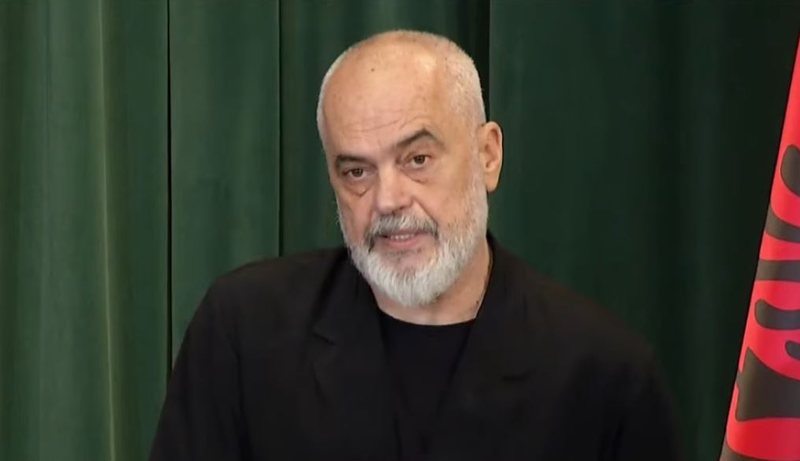
A Legal Desk reading of why the Prime Minister’s two-part distinction tracks the proportionality the Criminal Procedure Code already requires.
by Renada Bici (Tirana Examiner Legal Desk)
There are two questions buried inside the Zvërnec file, and the public argument has been collapsing them into one. The first is whether the Special Prosecution may investigate how coastal land inside a protected landscape passed into private hands. It may, it should, and no serious reading of the law says otherwise. The second is whether a preventive freeze may paralyze the bank accounts of the company that bought that land through regular procedure, while it is named as a suspect of nothing. On that second question, the narrow one that decides the fate of an investment described in public statements as the largest ever made in the country, the Prime Minister is standing on firm legal ground, and his critics have not noticed that the ground is the Code itself.
Preventive sequestration is not a blank cheque for the prosecution. Articles 274 to 276 of the Criminal Procedure Code permit the measure to attach to things connected to a criminal offense whose free disposal could prolong or aggravate its consequences, to the proceeds of the offense, and to property liable to confiscation under Article 36 of the Criminal Code. Every word of that is a limit. The measure is tethered to the offense and to its proceeds. It is not a general power to immobilize whatever money happens to be near a case while investigators work. Like every coercive measure in the Code, it is governed by necessity and proportionality. A freeze that reaches further than its purpose requires is not a stronger version of a lawful act. It is an unlawful one.
Apply that limit to the facts as they have been publicly described. Money standing as the price destined for a seller whose title is in question is close to the proceeds of the suspected offense, and blocking it is squarely within the purpose of the measure. The operating accounts of the buyer are a different thing. On the public record, freezing the buyer’s wider activity does nothing to secure the suspect proceeds, does nothing to preserve evidence, and does nothing the investigation has been shown to need. It halts a functioning enterprise. That is the precise distinction the Prime Minister drew when he said the block on the suspect owner’s funds is welcome while the block on the investor’s transactions is arbitrary. Strip the heat out of the word arbitrary and what remains is a proportionality argument that a first-instance judge is bound to weigh.
The argument grows stronger once the buyer’s position is named with the right caution. Albanian law, in its confiscation regime and in the principles that govern it, protects the third party who acquires in good faith through regular procedure. The buyer here, on the facts publicly described, entered through the channels the state prescribes and paid through the banking system. The Prime Minister has gone further and said the funds were examined by the national anti-money-laundering authority in coordination with international partners and returned as legal. That last claim rests, for now, on his word rather than on any published act of the agency, and the desk states it as his representation, not as established fact. Taken at face value, it does not distract from the legal question, as the critics charge. It goes to it. It is the asserted evidence that the buyer paid real money into the transaction rather than engineering it. Unless prosecutors can show the buyer was party to the scheme, the picture that emerges on the present record is of a purchaser who, if a fraud is later proven at the origin of the title, would be among those defrauded. A measure that freezes that party while the alleged fraudster’s gains are the real target works against the purpose of the law rather than for it.
This is why the Prime Minister’s two-part division reads less as an attempt to manage the prosecution than as a description of the disposition the Code points to on its own. Block the funds moving toward the owner under suspicion. Release the accounts of an investor against whom nothing has been alleged. And note where that remedy lives, because it is decisive: Article 274 provides that the court lifts the sequestration, on the request of the prosecutor or of the interested party, when the conditions for it change. The forum for that argument is the Special Court against Corruption and Organized Crime, not a podium, and the Prime Minister would lose nothing by saying so. But the path he is urging in public is the path the statute hands the company in private. He is not asking anyone to set the law aside. He is reading it out loud.
Two protections of the Code cut the same way and are too often left out. The preliminary investigation is secret by force of law, and the presumption of innocence holds until a final judgment, a line the Special Prosecution prints at the foot of its own notices. Those protections belong to everyone the file touches, the investor included. A measure or a leak that treats any party as guilty before the file is complete sits in tension with both, and a Legal Desk is entitled to point that out without taking a side on the merits the prosecutors have yet to argue.
None of this places the investor’s title beyond judicial reach. If the original alienation of the land proves criminal or void, the title itself is reviewable and may fall, and the buyer’s protection then is not the deed but restitution, the right to recover the price from whoever defrauded them. That is the same outcome the Prime Minister described when he said the legitimate owners would be paid and the party that lied would not. The argument here is narrower and survives either result. Coercive measures must be aimed at the suspected proceeds and the legally relevant assets. They may not be extended into a general paralysis of a third party’s lawful operations without a demonstrated necessity, and no such necessity has yet been shown in public.
So the verdict runs against the noise rather than with it. The legitimate quarry of this file is the chain of title. On the facts placed before the public so far, the company that bought that land through regular procedure is the law’s protected party and not its target, and a freeze that cannot tell proceeds from operations is the part of this case that needs correcting. The investigation should run to its end. The investment should run alongside it. The law, read as written, requires nothing less and permits nothing more.
Renada Bici is a Tirana-based lawyer practicing in civil, criminal, and administrative law. She holds a law degree from the University of Tirana and has experience in both private legal practice and public administration. She writes in her private capacity.