The Middle East escalation is not just a geopolitical event for the Balkans. It is a mirror.
By Mustafa Cuhadar (Ankara)
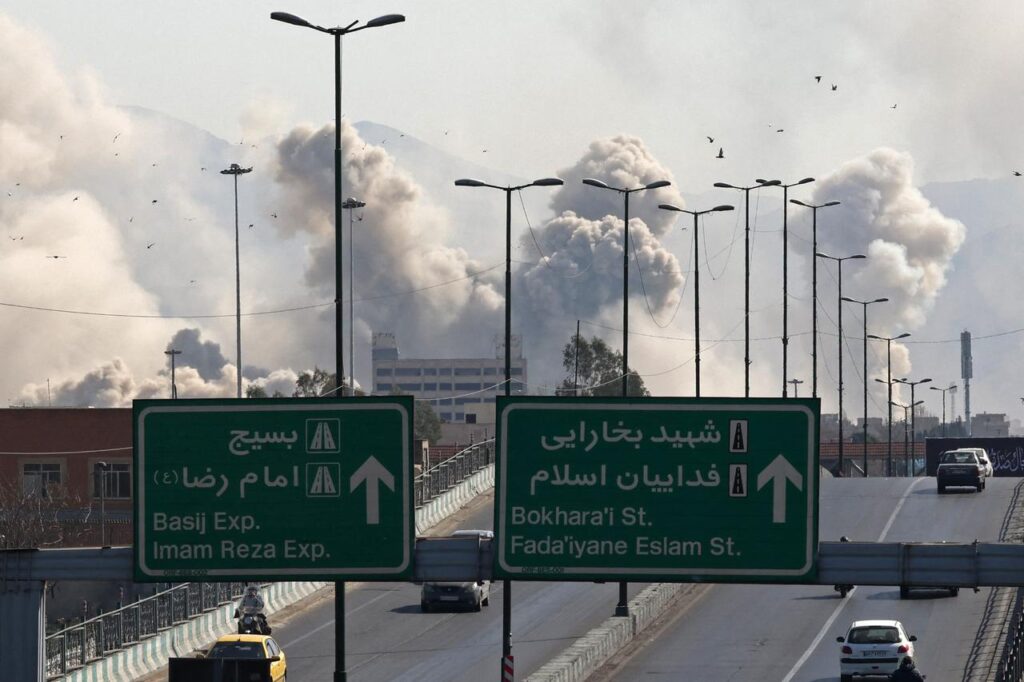
The massive escalation in the Middle East — U.S. and Israeli strikes on Iran, Tehran’s missile retaliation, and the spiral of responses that followed — is striking a nerve in the Balkans that goes well beyond geopolitics. For a region shaped by external interventions, unresolved nationalisms, and the living memory of recent war, a conflict thousands of kilometers away never quite feels distant.
The responses from regional capitals have been swift, predictable in their alignments, and revealing in their divergences.
Serbia’s President Aleksandar Vučić warned that the confrontation had been “long prepared” and would not end quickly, adding that Serbia must preserve peace while strengthening its defense — a formulation carefully calibrated to say everything and commit to nothing. Slovenia called for immediate de-escalation. Croatia noted that although the strikes had avoided civilian targets, its forces remain on high alert. North Macedonia stressed that while diplomacy remains the preferred path, deterrence has become a necessity.
The Western Balkans’ Euro-Atlantic flank was unambiguous. Kosovo signaled unwavering support for Washington, with President Vjosa Osmani declaring that “the hour of freedom has come for the people of Iran.” Albania went further, calling for the official designation of Iran’s Revolutionary Guard Corps as a terrorist organization and standing firmly alongside Israel and U.S. efforts to contain Tehran’s military ambitions.
The alignment map, in other words, looks exactly as it has for years.
What is more interesting is what this moment is exposing beneath it.
One statement drew particular attention — not for its content, but for the fact that it was made at all. Milorad Dodik, formally barred from public office following his conviction for defying Bosnia’s constitutional court, posted on X that “Republika Srpska will stand firmly alongside its friends and allies in Israel.”
The statement itself was unremarkable. What it revealed was something else.
Sinisa Karan holds the official title of Republika Srpska president. Dodik holds no office. And yet he continues to speak in the register of a head of state — issuing geopolitical declarations, positioning his entity on the world stage, conducting a parallel foreign policy from a position of formal illegitimacy.
The Bosnian judicial system removed him from power. He responded by engineering a form of dual authority designed to make that removal functionally meaningless.
Dodik once said, with characteristic theatrical menace, that Bosnia had ended up with “two Dodiks.” He meant it as a boast. He may have been more accurate than he intended.
What Bosnia now has is a leader who lost office and a leader who was never truly replaced — a constitutional ghost still haunting the institutions that expelled him. The international community’s inability to resolve this contradiction is not a footnote. It is the central unresolved question of Bosnian governance, and the Middle East crisis has inadvertently illuminated it by giving Dodik a stage he should not have.
Kosovo faces a different but related vulnerability.
Its alignment with Washington is unambiguous and, from Pristina’s perspective, non-negotiable. The United States remains the ultimate guarantor of Kosovo’s security and the anchor of its international legitimacy.
But that dependency cuts both ways.
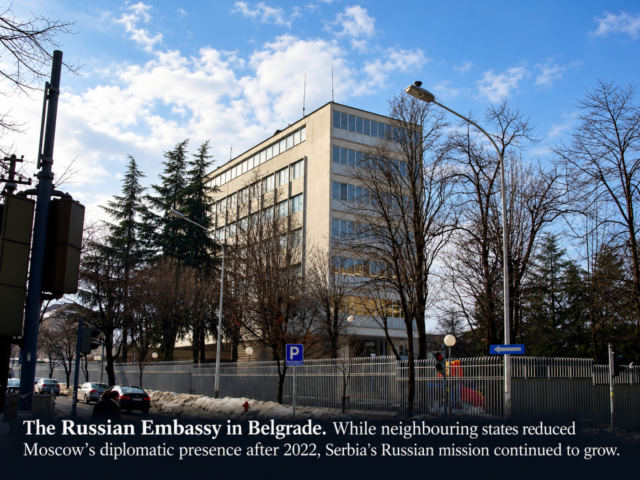
When American strategic attention is absorbed by a major Middle East escalation, the bandwidth available for the Western Balkans inevitably contracts. Belgrade understands this. Moscow understands it as well.
The north of Kosovo — where Serbian parallel structures have never been fully dismantled and where last year’s tensions left scars that have not fully healed — remains the region’s most exposed terrain. A prolonged Middle East crisis does not need to produce a direct provocation to create risk. It only needs to alter the cost-benefit calculations of those who have always viewed Kosovo’s northern municipalities as unfinished business.
Distraction can function as opportunity.
Pristina would be unwise to let its public solidarity with Washington obscure the quieter strategic exposure that solidarity alone cannot fully insure against.
This is the deeper risk for the Balkans in moments of global escalation.
The region does not need to be directly implicated in a distant conflict for that conflict to activate its own fault lines. Global polarization has a way of lending new energy to local grievances, giving cover to actors who benefit from instability, and drawing outside powers back into influence games the region has spent three decades trying to escape.
That risk is not merely theoretical. It is being felt on the ground.
Across parts of Bosnia, residents have quietly begun stocking basic supplies — flour, oil, fuel. The behavior requires no manifesto. It is the muscle memory of people who know what fragile peace looks like and who have learned not to wait for official reassurance before preparing for the worst.
Trauma does not require a direct threat to awaken. Proximity to the logic of war is enough.
The Balkans is not on the front line of the Middle East conflict.
But it is not insulated from it either.
For a region where outside powers have so often shaped local destinies, the question is never simply what is happening elsewhere.
It is always the same one: what does it permit here — and who will use it?
About the author
Mustafa Cuhadar is an Ankara-based international news editor specializing in Balkan and EU politics and economics. He is also a Ph.D. candidate focusing on Serbia–Türkiye relations and speaks Bosnian, Croatian, and Serbian fluently. As the editorial lead of BalkanLine, a newsletter under the Türkiye Today brand, he connects readers to the key stories, trends, and power shifts redefining the Balkans.